Friday, January 28, 2005
Hmm, how tempting. I got an offer in the mail from our power utility for their wonderful FIXED PAYMENT PLAN! I can now know EXACTLY what my power bill will be each month. I think they are counting on people not reading these things. I came across the following sentence in the brochure: "If your electric usage under the program remains consistent with your actual usage during the last one to two years, adjusting for the effects of unusual weather, you may pay up to 10 percent more than you would have paid under your standard rate schedule plus a $1 monthly administrative fee." The fee is undoubtedly to hire more people to figure out what to do with all the extra money they take in.
Wednesday, January 26, 2005
Haave you ever had the experience where you liked something so much that you despair of ever enjoying another of that type of thing again? Well, I just watched Once Upon A Time In The West and don't know if I'll ever enjoy another western. While it might not be quite the "perfect" film, I don't know that I've seen another where all the artistic elements came together so well. For three hours everytghing about the film is riveting.
If you would like to be part of a PCA blog aggregator, check this out. Basically this would mean that your blog entries would be noticed on a list of a great number of other presbyterian bloggers, and conversely you could find out what others inthe denomination arw writing about.
Sunday, January 23, 2005
I have to admit that I often find myself baffled by Eastern Orthodox writers, but this is just an amazing piece of writing.
Friday, January 21, 2005
My sister-in-law, Mindy, recommended that we watch a film called Heavens Above. Given that all I knew about it was that it was a 60s film about religion starring Peter Sellers, I was a bit skeptical. My skepticism was unfounded. This was a terrific movie, and one of the best blends of Christian idealism (in the sense of "go sell all you have and give to the poor") and realistic consequences (fickle, scheming poor people, local economic collapse) that I've ever run across in any form. The only draw back is that it focusses almost entirely on the interpersonal charity aspect of the gospel that it ignores a lot of other essential Christian themes. But it handles the idea of charity so well that I have no hesitation in recommending it to you. It's very funny as well.
Wednesday, January 19, 2005
Monday, January 17, 2005
I was thinking in the shower today (I wonder how much of my thinking I do in there), a not very original thought, I'm sure, i.e. that our minds are like soup pots. Each idea/flavor we add in is going to react to whatever else is already in there. Some ingredients probably won't do well until others have been already established. If your first ingredient in your soup is pepper, it won't be very palatable for a while. Things need to be balanced out.
I was thinking this regarding how my views of politics and religion have been formed and changed since college. Due to the influence of certain people I won't name, I came to read a lot of literature associated with a movement referred to as "theonomy" during and immediately after college. The general gist of this movement is that Jesus (and Paul) affirmed a continuing role for the OT law, not just at the individual level, but also for society widely. Greg Bahnsen set out the most systemic exegetical foundation for this in his book Theonomy and Christian Ethics, basing much of his case on his reading of Matt 5:17-20. The movement died a slow death, I suppose, throughout the '90's, facing both internal and external problems and criticisms.
Certain writers of this movement, the most prolific being Gary North, tried to take a thorough going look at the OT and make some effort to find applications of the particularities of the various laws to contemporary society. Those of a generally antinomian mindset found this patently ridiculous, but I always thought this was a worthwhile exercise, at least in principle. North himself always chided his critics that if they didn't like his work, they should go do thier own homework and present a rival vision.
I had put this subject on the back burner (or do I have to put the whole pot on the back burner?) to try to read more widely. Then I ran into (like a brick wall) the work of Stan Hauerwas. It's more than I can handle here to lay out Stanley's positions on politics, especially as he is everything except systematic in his writings. Much of what he said, though, had odd echoes of what the theonomists lad also said. He wrote in defense of casuistry (the close reading and application of texts), sharply and mercilessly criticized pluralism and liberalism, and even seems to think highly of John Calvin. Yet so much was strikingly different as well. For one thing, Hauerwas' intended audience seems to be the mainstream, liberal academic and religious community rather than the conservative, fundamentalist and reformed communities addressed by the theonomists. More at the heart of things, though, Hauerwas criticized the view of power and violence which have become foundations of our way of life in America.
Following the work of John Howard Yoder, Hauerwas feels that be be a Christian means to follow the example of Jesus, and the example of Jesus was to eschew violence in favor of suffering and martyrdom in the face of evil. Also Hauerwas focused on how the church is an alternative politics to the politics of power and violence which the state always seems to represent. I could go on, but perhaps that's a close enough summary.
Anyhow, I picked up a book which had been sitting unread on my shelf for a very long time, God and Politics: Four Views on the Reformation of Civil Government. The four views style themselves "Theonomy", "Principled Pluralism", "Christian America", and "National Confessionalism". I'm only half through at the moment, but it seems thus far that each position is well within the reformed/puritan tradition of emphasizing a positive view of OT law in political analysis. Their differences, to this point, are not really radical ones.
While I don't know what I would have made of this book had I read it ten or fifteen years ago, I suspect I would have seen Bahnsen (theonomy) as the "good guy" and the others as wrong insofar as they diverged from him. At this point I find myself thinking that none of them have come to terms fully with the question of why a "christian" view of politics should focus on America.
Sorry for the rambling, long winded nature of this. If I was more systematic I would have thrown in lots of relevant quotes and made this into a good 15 page paper, so be thankful its as short as it is.
I was thinking this regarding how my views of politics and religion have been formed and changed since college. Due to the influence of certain people I won't name, I came to read a lot of literature associated with a movement referred to as "theonomy" during and immediately after college. The general gist of this movement is that Jesus (and Paul) affirmed a continuing role for the OT law, not just at the individual level, but also for society widely. Greg Bahnsen set out the most systemic exegetical foundation for this in his book Theonomy and Christian Ethics, basing much of his case on his reading of Matt 5:17-20. The movement died a slow death, I suppose, throughout the '90's, facing both internal and external problems and criticisms.
Certain writers of this movement, the most prolific being Gary North, tried to take a thorough going look at the OT and make some effort to find applications of the particularities of the various laws to contemporary society. Those of a generally antinomian mindset found this patently ridiculous, but I always thought this was a worthwhile exercise, at least in principle. North himself always chided his critics that if they didn't like his work, they should go do thier own homework and present a rival vision.
I had put this subject on the back burner (or do I have to put the whole pot on the back burner?) to try to read more widely. Then I ran into (like a brick wall) the work of Stan Hauerwas. It's more than I can handle here to lay out Stanley's positions on politics, especially as he is everything except systematic in his writings. Much of what he said, though, had odd echoes of what the theonomists lad also said. He wrote in defense of casuistry (the close reading and application of texts), sharply and mercilessly criticized pluralism and liberalism, and even seems to think highly of John Calvin. Yet so much was strikingly different as well. For one thing, Hauerwas' intended audience seems to be the mainstream, liberal academic and religious community rather than the conservative, fundamentalist and reformed communities addressed by the theonomists. More at the heart of things, though, Hauerwas criticized the view of power and violence which have become foundations of our way of life in America.
Following the work of John Howard Yoder, Hauerwas feels that be be a Christian means to follow the example of Jesus, and the example of Jesus was to eschew violence in favor of suffering and martyrdom in the face of evil. Also Hauerwas focused on how the church is an alternative politics to the politics of power and violence which the state always seems to represent. I could go on, but perhaps that's a close enough summary.
Anyhow, I picked up a book which had been sitting unread on my shelf for a very long time, God and Politics: Four Views on the Reformation of Civil Government. The four views style themselves "Theonomy", "Principled Pluralism", "Christian America", and "National Confessionalism". I'm only half through at the moment, but it seems thus far that each position is well within the reformed/puritan tradition of emphasizing a positive view of OT law in political analysis. Their differences, to this point, are not really radical ones.
While I don't know what I would have made of this book had I read it ten or fifteen years ago, I suspect I would have seen Bahnsen (theonomy) as the "good guy" and the others as wrong insofar as they diverged from him. At this point I find myself thinking that none of them have come to terms fully with the question of why a "christian" view of politics should focus on America.
Sorry for the rambling, long winded nature of this. If I was more systematic I would have thrown in lots of relevant quotes and made this into a good 15 page paper, so be thankful its as short as it is.
Friday, January 14, 2005
I had some additional thoughts on this subject to add. These were not thought of in response to the comments to the post below, but I think they do intersect in some ways. One of the areas of life and thought I've been working on in my thinking and reading in the last few years is the subject of habits, practices and virtues. This isn't the time/place to set that all out in a systematic way, but I think there are some lessons for this particular topic. Again let me assure you that I am not feeling judgmental of any of you who use pseudonyms, but rather just hoping that we can all think a little further about this stuff.
One of the "advantages" of intentional anonymity in internet publishing is that one can write about people with impunity. Many times I've had situations of frustration or anger or disappointment with people I deal with in various ways (home, work, church or elsewhere) that I thought I might like to write about. Given that I committed very early on to using my own name on this stuff, I have been learning just to keep my mouth, or keyboard, shut on most of this. There is always the possibility that someone will find out that I wrote about them. There was one situation last year that really impacted me emotionally, but it involved someone's shameful behavior and I definitely would have been out of line to write about it.
Thus one argument for identifying oneself is that it leads to the practice of restricting our natural tendencies toward gossip. I'm tempted to go off about the funny ways we use the word "truth" these days (often using it to mean, "here's something evil I'd like to tell you about so and so"), but I won't. Stanley Hauerwas has written very eloquently on this particular subject, and I'll try to look up some referenced for any of you who care to look them up, rather than giving you my half-baked version.
As for TulipGirl's point about the semi-permanence of our immaturity, I am sympathetic. I hope, though, that recognizing that we are publishing whenever we hit that send button will help us learn to be cautious. This is a problem that any writer has to face, and I know I've heard numerous writers express grief over things they wrote "early on". Establishing identity strikes me as the more responsible way to handle things.
I think it may be good or useful to have occasions and places to be pseudonymous, just as it is occasionally cathartic to go to a costume party, or perhaps a faraway city where we are not known, but there are also significant moral risks that go along with these things. Let us strive to be ourselves, to be wise and sober, and write responsibly. Now I'm starting to sound like one of those ads about not drinking and driving.
Thursday, January 13, 2005
I've noticed a great divide on the internet among those who use their own names and those who do not. I want to say first that many of my favorite people to read on the 'net are writing pseudonymously. Having said that though, I think it is not helpful in the broad scope of things.
I remember debating a little bit with Seth, now no longer active, on the subject of whether one could rightly consider the people one interacts with in a positive way on the internet as friends. He maintained that friends was not acceptable, preferring the term "buddies". This bothered me a little. I think it is perhaps hard for any of us to define "friends" with any precision, but I certainly think of some people I have met through the 'net as friends, even if in a different sense than some of my more local friends. But it strikes me that the way one perceives this question is going to affect the reality, that is to say, if one perceives internet transactions as "virtual", as anonymous bit of data we might say, then perhaps the result will be a less human interaction. When I interact with someone who uses their own name, I have a stronger sense of dealing with a person, rather than a persona (or avatar, or what have you).
To draw one positive, and personal, example, I have enjoyed greatly interacting with Joel Garver in various ways over the last several years. This has been through email lists, discussion boards, his own blog, comments on my blog (and other mutually read blogs), and via IM. Joel has, especially on his blog, made some effort to root himself in his own space, that is, he writes from time to time about his church, his family, and his city and his workplace. All of this helps me seem him in a more real way, despite the fact that he is a philosopher, dealing in the more ethereal sorts of issues and topics.
The most negative feelings I tend to have are toward those who I only "meet" though comments left on various blogs signed with a pseudonym. I generally think to myself, "gee, this person isn't even willing to put his or her own name to this, and he expects me to respect his point of view." I find myself thinking that often no matter what the content of their expressed opinion is. While I recognize that this is not a very helpful attitude, it is an involuntary one.
To draw an analogy from another field (and my wife's bete noir), I will mention the problem of bad drivers/road rage. I am given to understand that a major underlying cause behind aggressive or rude driving habits is the insularity of the automobile. We tend to perceive others on the road as cars rather than as people. We will say things like, "that blue Honda just cut me off". Often we cannot even see the drivers. If we somehow knew that the blue Honda was driver by a friend or beloved relative, I know that our anger would be greatly reduced and our forgiveness more forthcoming. It is much easier to be angry at a fleeting inanimate object.
In the same way, it is much easier to treat badly on the 'net those we don't know, those we cannot see, those who will not have a direct impact on our lives. Seth, as mentioned above, took the position that this is just part of the fun. We can send our personas out to do battle with each other, recognizing that they are not "us", but more like our battle robots or something. Insofar as we distance ourselves from these battles, we don't get hurt. My preference is to go entirely the other way. To recognize that the internet is a means of communicating with real people, that people can be hurt by what they read, that we should all be quick to apologize and seek forgiveness for wrongs done "in here", and that we should be willing to be seen as human.
I think this will get too long for dealing with the topic or the risks associated with openness on the 'net, so I'll leave that unsaid for now. Will be happy to continue this at a later time.
Tuesday, January 11, 2005
The Book Meme
I pretty much never do these things, but this one is my speed.
Copy the list, then remove from it the names of any authors not in your home library, replacing them with names of authors you have. Boldface the ones you’ve added.
(I'm leaving Kundera on my list on the grounds of a short story in a lit collection, bold authors are ones I've read in the past year)
taken from John "W" Bush
1. Pascal
2. Walker Percy
3. James Ellroy
4. Anthony Trollope
5. Jane Austen
6. John Piper
7. Milan Kundera
8. Gene Wolfe
9. V.S. Naipul
10. William Shakespeare
I pretty much never do these things, but this one is my speed.
Copy the list, then remove from it the names of any authors not in your home library, replacing them with names of authors you have. Boldface the ones you’ve added.
(I'm leaving Kundera on my list on the grounds of a short story in a lit collection, bold authors are ones I've read in the past year)
taken from John "W" Bush
1. Pascal
2. Walker Percy
3. James Ellroy
4. Anthony Trollope
5. Jane Austen
6. John Piper
7. Milan Kundera
8. Gene Wolfe
9. V.S. Naipul
10. William Shakespeare
Saturday, January 08, 2005
At one time I used to beat up on Ron Sider's writings (and perhaps in his past writings there is much worth beating up on), but I have to say that on the whole this is an very fine article, my only quibble being that in the section on America's wealth in comparison to other nations he does nothing interesting with the information and additionally falls into the trap of thinking that per capita income is a relevant comparison with third world nations.
Friday, January 07, 2005
Finished two books while on my trip. One was Veiled Sentiments, a cultural anthropologist's account of her feildwork among Bedouins in Western Egypt. A couple of things really stood out here. One was that the society functioned in a stable and fairly happy way with a very high degree of gender segregation without the women seeming to feel like they were being mistreated. Studies like this need to be considered by those who find "misogyny" in biblical texts. Patriarchalism, and perhaps even sexism (in the sense that males would consider themselves in some way morally superior to females), but not really hatred of women.
The other aspect was the role poetry plays in Bedouin society. Abu-Lughod quotes a number of ghinnawas--short two line poems--she heard and recorded in her field work. The interesting part was that that "meaning" of the poem in that society was almost entirely a function of the social context. To put this in another, perhaps more comprehensible way, when she would ask someone what a certain poem meant, they would invariably respond by asking who said it.
The second book was a short paperback entitled Who is For Peace, made up of three fairly short essays on war and peace, occasioned by the 1983 Catholic bishops pastoral letter on the subject. On the whole the book was very disappointing. Francis Schaeffer wrote the first essay where he equates the ability to demonstrate strength with the obligation to somehow use violence to protect the weak. He does not really go to any length to show how this might be effective, draws a caricature of pacifism as the "do nothing" option, and provides no specifically Chirstian analysis of the problem despite calling his position a "Christian Worldview".
The second, and longest, essay was Vladimir Bukovsky's. He retold some of the horror pepetuated by the Soviet Empire and accused the peace movement of acting as an agent for the furtherance of totalitarianism. His statements, while seeming a little dated now, did have plenty of weight to them, since he showed that many of these "peace" movements were funded by the Soviets themselves, taking advantage of the desire to avoid violence on the part of the liberal West. My only response to much of this was that truth telling all around was certainly called for, rather than the intentional blindness many leftists seemed to have in the 20th century, but that that is not by itself a reason to oppose non-violence.
The third essay, and certainly the most rigorous, was James Hitchcock's analysis of the Catholic bishops letter itself. He argued that the whole thing was disingenuous. Part of his evidence was that the letter equated war and abortion (seeming to show that being a good catholic would involve opposing both of these), and yet it was received gleefully in many qurters where abortion was sacrosanct without raising any eyebrows. All in all this was the only portion of the book I found interesting at all. Was hoping to find a bit more intelligent interaction from some sort of just-war perspective, but I guess I'll have to look elsewhere.
The other aspect was the role poetry plays in Bedouin society. Abu-Lughod quotes a number of ghinnawas--short two line poems--she heard and recorded in her field work. The interesting part was that that "meaning" of the poem in that society was almost entirely a function of the social context. To put this in another, perhaps more comprehensible way, when she would ask someone what a certain poem meant, they would invariably respond by asking who said it.
The second book was a short paperback entitled Who is For Peace, made up of three fairly short essays on war and peace, occasioned by the 1983 Catholic bishops pastoral letter on the subject. On the whole the book was very disappointing. Francis Schaeffer wrote the first essay where he equates the ability to demonstrate strength with the obligation to somehow use violence to protect the weak. He does not really go to any length to show how this might be effective, draws a caricature of pacifism as the "do nothing" option, and provides no specifically Chirstian analysis of the problem despite calling his position a "Christian Worldview".
The second, and longest, essay was Vladimir Bukovsky's. He retold some of the horror pepetuated by the Soviet Empire and accused the peace movement of acting as an agent for the furtherance of totalitarianism. His statements, while seeming a little dated now, did have plenty of weight to them, since he showed that many of these "peace" movements were funded by the Soviets themselves, taking advantage of the desire to avoid violence on the part of the liberal West. My only response to much of this was that truth telling all around was certainly called for, rather than the intentional blindness many leftists seemed to have in the 20th century, but that that is not by itself a reason to oppose non-violence.
The third essay, and certainly the most rigorous, was James Hitchcock's analysis of the Catholic bishops letter itself. He argued that the whole thing was disingenuous. Part of his evidence was that the letter equated war and abortion (seeming to show that being a good catholic would involve opposing both of these), and yet it was received gleefully in many qurters where abortion was sacrosanct without raising any eyebrows. All in all this was the only portion of the book I found interesting at all. Was hoping to find a bit more intelligent interaction from some sort of just-war perspective, but I guess I'll have to look elsewhere.

Thursday, January 06, 2005
Just got back home from Monroe. Pretty exhausted. Don't even want to think about what I have to catch up on right now. The conference was terrific. The real take home for me was that Wright's Pauline theology is not considered, at least by Dr Gaffin, as substantially different than reformed theology as it's been developed by Ribberbos et al. The structure of the conference, for those who were not there. Was for each speaker to present five lectures on the basics of Pauline theology--these were alternated between the speakers--as well as having three Q&A sessions where Wright and Gaffin would ask each other questions then answer a few submitted by the attenders. The mood of the whole conference was quite friendly. I got the feeling that a few people wanted to see some sparks fly, and there were, of course, a few points of disagreement, but both men genuinely seemed to appreciate each other's work and felt that their perspectives were ratheer similar.
Daniel Kirk has pointed up the main point of contention that Wright raised about the way Gaffin portrays Paul. To put it as quickly as I can, Wright felt that not enough attention has been paid to the idea that Paul sees the work of Christ as the culmination of God's work/covenant/what have you with ISRAEL, rather than a general timeless sort of thing. That would need to be nuanced a lot more to be fair, but it gets to the heart of the matter.
I doubt I'll have much more to say about the conference, since I have a lot less of an emotional/political/vocational stake in it than many other attenders. It was great to see quite a few people whom I had only encountered online heretofore, such as Tim Gallant, Barb Harvey, Kevin Bush, Jim Jordan and many others.
Daniel Kirk has pointed up the main point of contention that Wright raised about the way Gaffin portrays Paul. To put it as quickly as I can, Wright felt that not enough attention has been paid to the idea that Paul sees the work of Christ as the culmination of God's work/covenant/what have you with ISRAEL, rather than a general timeless sort of thing. That would need to be nuanced a lot more to be fair, but it gets to the heart of the matter.
I doubt I'll have much more to say about the conference, since I have a lot less of an emotional/political/vocational stake in it than many other attenders. It was great to see quite a few people whom I had only encountered online heretofore, such as Tim Gallant, Barb Harvey, Kevin Bush, Jim Jordan and many others.
Saturday, January 01, 2005
A good New Year to you.
Yet another article on the risks of risk avoidance, this one in a case where the stakes are quite high. If you read this and find yourself interested in a more thorough treatment, I highly commend the PBS Frontline special (you'll have to find it yourself) called Harvest of Fear. They did a great job of presenting all sides and letting people speak for themselves, which of course made one side look like total idiots.
Yet another article on the risks of risk avoidance, this one in a case where the stakes are quite high. If you read this and find yourself interested in a more thorough treatment, I highly commend the PBS Frontline special (you'll have to find it yourself) called Harvest of Fear. They did a great job of presenting all sides and letting people speak for themselves, which of course made one side look like total idiots.
Tuesday, December 28, 2004
From the International Partnerships HQ:
December 27, 2004
Dear Friends,
Thank you for your continued prayers for Ukraine! We still haven’t heard the final count of votes, but as I am writing this we know that with 99.89% of votes counted Yuschenko (good guy!) wins by 8 %! We are VERY happy and VERY excited! We are also thankful that God allowed us to be participants in making this victory! It is such an awesome privilege!
Ps 3:8: “From the Lord comes deliverance, may your blessing be on your people”.
“Ukraine has been independent for almost 14 years, but it became free only today”, said Yuschenko at 3:00 am while speaking to 50,000 people that gathered on Independence Square to celebrate victory together. Thousands of people spent the whole night there as one big family, cheering and congratulating each other. Nick and I wished we could be there too, but kids were sleeping and we just couldn’t go. Yuschenko finished his speech with his usual words: “Glory be to God!”
We spent most of last night between TV, internet and phone calls to friends trying not to miss any important details of what was going on as the voting places closed and committees started counting the votes.
We trusted the Lord because we knew it was all in His hands. Our prayer for Ukraine was similar to one in Ps 130:5-8: “I wait for the Lord, my soul waits, and in His word I put my hope. My soul waits for the Lord more than watchmen wait for the morning. O, Ukraine, put your hope in the Lord, for with the Lord is unfailing love. He Himself will redeem Ukraine from all their sins.”
But even though we gave all our concerns, dreams, hopes to God I have to confess we could not help but worry. Two of our staff, Tolic Korzhov and Igor Samohin (from Odessa team), went to Donetsk (a very dangerous place during these elections) to be members of election committees there. We were praying for their safety as we heard about cases of Yuschenko’s representatives in Donetsk being beaten up or kidnapped.
We were also concerned about threats that we had heard from Yanukovich (the other candidate ) that if he doesn’t win there will be 35,000 self-organized armed men coming to Kiev to defend him. The Orange Revolution has been peaceful so far and even though we now know that a couple times our existing president was very close to giving orders to the military to attack the crowd, he didn’t dare do it. But, these threats from Yanukovich sound very serious since everybody knows that there are criminal gangs standing behind him.
When we heard results of exit polls last night and then results of actual vote count we rejoiced! This is what the Orange Revolution was for - transparent and honest elections. But it’s still not over.
Yanukovich announced that he is going to try to prove that elections were not legitimate and will appeal to Supreme Court. He has no chance to win, but it seems that his strategy is to further destabilize Ukraine. Please pray that he will just give up and let Ukraine enter this New Year with new hopes and optimism, instead of the frustration and irritation everybody is feeling right now toward him.
We also want to ask you to pray for people in Eastern and Southern regions of Ukraine. I think we shared with you earlier that propaganda in those regions tried to set people there against the rest of Ukraine. They were successful. There is a great deal of aggression in those regions. My brother’s wife’s parents live in Donetsk region. They call their daughter and verbally attack her on the phone. Our relationships with many friends we have in Donetsk are very strained.
Half of IP teams are in the Southern and Eastern regions. They tell us about a very heavy atmosphere of fear and aggression. They say it feels like darkness.
Pray that we can love those people in the East and South so much that they see the truth. During the revolution when men from Eastern Ukraine came to Kiev, people here took food and warm cloths to them and won their hearts -not with logical arguments but with love and care. We need to keep winning with love those people who have lived in informational isolation during these past couple of years. As Romans 12:21 says: “Do not be overcome by evil, but overcome evil with good”
Please, keep praying for Ukraine! I see the other part of my country full of passion right now. People who participated in the revolution are inspired by victory, they are proud of making their contribution in changing the future of Ukraine, they are full of hopes and optimism! This is wonderful! But we know that if people just put their hopes only on the new president (even a good one like Yuschenko) eventually they will get disappointed.. We don’t want our people to fall into despair again. We know that what they really need is Christ; only in Him their hopes are secure.
Pray for our staff both in those regions that are in darkness of fear and aggression and in those regions that are in joyful celebration of victory. Pray that God will give them wisdom to use whatever circumstances people are in to help them find Christ.
Thank you again, our friends, for being with us through your prayers and support! We hope you feel how God is greatly using you in bringing change to Ukraine! You are in our prayers too!
In Christ,
Nick, Maia and IP staff
Saturday, December 25, 2004
We spent a lovely Christmas Day at the Nelson's with the 6 of them and our 2 Russian friends. Plenty of food and drink and sweets. We contributed a new game we picked up called Balloon Cup.
As an aside, if there's a Games Galore (or similar store) in your area, the clerks there are very knowledgeable about games and can recommend things for whatever taste or needs you have. The fellow in the Raleigh store got out 3 games and ran me through sample play on them so I could see how they worked.
I'll try to post my favorite books of the year here in the next week. One difficulty is that many of my favorites I loaned out, so they are "out of sight, out of mind." I'll try my best though.
As an aside, if there's a Games Galore (or similar store) in your area, the clerks there are very knowledgeable about games and can recommend things for whatever taste or needs you have. The fellow in the Raleigh store got out 3 games and ran me through sample play on them so I could see how they worked.
I'll try to post my favorite books of the year here in the next week. One difficulty is that many of my favorites I loaned out, so they are "out of sight, out of mind." I'll try my best though.
Friday, December 24, 2004
My wife begged me to post this one. This is from my friend Ted. Ted has been studying some advanced technology field or other, but has been working as a rabbit farmer to make ends meet (and also because he likes rabbits). I know we shouldn't laugh at grammar mistakes and such, but they make me smile. Here it is :
Hello Paul!
Merry Christmas and Happy New Year!
My best congratulations on the occasion of the coming New Year and Christmas. I wish you and your family be happy, healthy and wealthy. May all your dreams come true! I hope you are all well. I am very good. In December 16 I had finished my University. I am very happy about this. Now I have holidays and search a work. First elections in Ukraine was falsify. Every day we had many strikes. Now we have criminal government, and I believe we change government. We have good chance to change life. I think you know about situation in Ukraine. I hope new elections will be more fair. We have many observers from many countries. Our candidate Uschenko can change life in Ukraine. Many people support our candidate because they don`t want criminal goverment. Americans have liberty country and I believe after 26 of December Ukraine will have liberty country too. This strikes unite many people and gave hope and faith to live in prosperous country. We have had orange peaceful revolution. Many people, cars and houses have orange materials. It`s cool. All churches are praying for Ukraine and I believe God helps us. I saw pictures of your baby it is interesting. I hope all will be good.
God bless you!
Ted
Many of you have expressed concern over this post from a few days ago. I'm finally able to bring you a little bit of video to show what we were dealing with.
Wednesday, December 22, 2004
Tuesday, December 21, 2004
Nothing says winter in the great north like exploding zambonis. Would be a good name for a band as well.
[edit video available here!]
[edit video available here!]
Friday, December 17, 2004
One of the things I enjoy about our area, especially over the last several months, is some of the local programming on WUNC radio (our NPR affiliate). One show is called Back Porch Music, featuring an amazingly broad variety of american folk music, music of which is just fabulous. The other, more recently in mind, is a state issues program called The State of Things. Episodes I've enjoyed lately have featured authors James Ellroy and Tom Wolfe.
Today they interviewed a man named Donald Duncan who is employed as story teller-in-residence by the Krispy Kreme Corporation (I thought about spelling it Korporation but didn't like th initials). Mr Duncan is a retired UMC pastor and now full time story teller. When asked how his work was different than that of a motivational speaker, he responded that stories are a sort of mirror which show us things about ourselves in a way that slips past our defenses. I believe he mentioned Nathan the prophet in this regard. So much of what he said seemed relevant to the things I've learned in the last few years regarding narrative theology.
I wish for all of your sakes (and mine as well) that WUNC archived and made these shows available on the web, but I believe they do not right now. Another reason for you to move to North Carolina I suppose.
[edit: they do make it available here.
Today they interviewed a man named Donald Duncan who is employed as story teller-in-residence by the Krispy Kreme Corporation (I thought about spelling it Korporation but didn't like th initials). Mr Duncan is a retired UMC pastor and now full time story teller. When asked how his work was different than that of a motivational speaker, he responded that stories are a sort of mirror which show us things about ourselves in a way that slips past our defenses. I believe he mentioned Nathan the prophet in this regard. So much of what he said seemed relevant to the things I've learned in the last few years regarding narrative theology.
I wish for all of your sakes (and mine as well) that WUNC archived and made these shows available on the web, but I believe they do not right now. Another reason for you to move to North Carolina I suppose.
[edit: they do make it available here.
Ha. It turns out that the name Trinity Foundation was already taken. Key article quote:
"It's a strange fact, but when you study the Scripture seriously it brings out all this stuff in people," Bloom says. "You'd think you were going to read the Book of Ephesians and suddenly someone was saying, 'Oh, my crack-addicted sister came over last night and slapped my daughter.' And that's what you ended up dealing with."
or this:
Later, at some local dive, he'd ask Anthony what all the ruckus was about. "Romans. We're still studying the Book of Romans," Anthony would tell him.
"What specific aspect of Romans is causing this level of interest?"
"Well, we were talking about your place in the body of Christ. And I told one guy his place was to be a pimple on the ass of the body of Christ. I just said it. It just came out."
"And he didn't agree?"
"A lot of these people are clinging to their miserable little self-images. They don't understand that it's about God. It's about them, but only the part of them that contains God. They still think they're special."
If you don't know what I meant in my first line, trust me, you are the better off for it.
"It's a strange fact, but when you study the Scripture seriously it brings out all this stuff in people," Bloom says. "You'd think you were going to read the Book of Ephesians and suddenly someone was saying, 'Oh, my crack-addicted sister came over last night and slapped my daughter.' And that's what you ended up dealing with."
or this:
Later, at some local dive, he'd ask Anthony what all the ruckus was about. "Romans. We're still studying the Book of Romans," Anthony would tell him.
"What specific aspect of Romans is causing this level of interest?"
"Well, we were talking about your place in the body of Christ. And I told one guy his place was to be a pimple on the ass of the body of Christ. I just said it. It just came out."
"And he didn't agree?"
"A lot of these people are clinging to their miserable little self-images. They don't understand that it's about God. It's about them, but only the part of them that contains God. They still think they're special."
If you don't know what I meant in my first line, trust me, you are the better off for it.
I hope y'all notice that my son can find middle C here with very little help. Ok, maybe a lot of help, but for 3 months old I say its pretty good.
Thursday, December 16, 2004
With thanks once again to my friend who shall remain nameless (Kirk Nelson), I point you to an article on the Presbyterians, Free Masons, and Kenyan Iconoclasm. I couldn't make this stuff up, really.
Thursday, December 09, 2004
Just found the website of my old piano teacher, now working as a composer. I'm enjoying the music samples quite a bit. He was a great musician, great pianist and very nice person. Hope he does well.
I bet this is getting pretty heavy traffic, but you should probably read this story on Anthony Flew. My favorite part is (atheist) Richard Carrier reassuring his followers that its only a minimal god Flew is believing in. No cause for alarm.
I think the interesting idea in this is that a philosopher and pretty much lifelong atheist would find that a) the evolutionary explanation for the origin of life was not credible, and thus b) there must be a god. I guess some of the traditional arguments still work.
I think the interesting idea in this is that a philosopher and pretty much lifelong atheist would find that a) the evolutionary explanation for the origin of life was not credible, and thus b) there must be a god. I guess some of the traditional arguments still work.
If I thought Psychology Today published articles like this one all the time, I would subscribe in a heartbeat. I really couldn't agree more with the general tenor of the argument. Kids, I believe, cannot learn unless given the possibility of failure, with its accompanying pain.
I've been constantly amazed as a new parent with all the "safety" items which are now considered mandatory (either legally or socially) which did not exist when I was a child. Undoubtedly some are good, and with an infant you do have to be quite careful to prevent serious harm, but I have to think that all the insulation from pain has to have negative developmental results, as the article would suggest.
I've been constantly amazed as a new parent with all the "safety" items which are now considered mandatory (either legally or socially) which did not exist when I was a child. Undoubtedly some are good, and with an infant you do have to be quite careful to prevent serious harm, but I have to think that all the insulation from pain has to have negative developmental results, as the article would suggest.
Monday, December 06, 2004
In our small group Bible study last week we were discussing Mark ch 4, which contains this passage:
21He said to them, "Do you bring in a lamp to put it under a bowl or a bed? Instead, don't you put it on its stand? 22For whatever is hidden is meant to be disclosed, and whatever is concealed is meant to be brought out into the open. 23If anyone has ears to hear, let him hear."
24"Consider carefully what you hear," he continued. "With the measure you use, it will be measured to you--and even more. 25Whoever has will be given more; whoever does not have, even what he has will be taken from him."
I asked people what they thought Jesus meant by the lamp imagery in v 21. BTW, I wasn't leading the discussion, but we're fairly democratic, so they let me ask my own questions sometime. Someone answered that Jesus was saying that we should live our lives in public in such a way as to draw attention to the gospel (or words to that effect). It occurred to me while I was reading the passage that that interpretation desn't seem to make sense at all within the context. The light here seems to be revealing things which are secret. The broad contextual idea seems to be preparing for the judgement of God. Anyone else thought about this particular verse?
21He said to them, "Do you bring in a lamp to put it under a bowl or a bed? Instead, don't you put it on its stand? 22For whatever is hidden is meant to be disclosed, and whatever is concealed is meant to be brought out into the open. 23If anyone has ears to hear, let him hear."
24"Consider carefully what you hear," he continued. "With the measure you use, it will be measured to you--and even more. 25Whoever has will be given more; whoever does not have, even what he has will be taken from him."
I asked people what they thought Jesus meant by the lamp imagery in v 21. BTW, I wasn't leading the discussion, but we're fairly democratic, so they let me ask my own questions sometime. Someone answered that Jesus was saying that we should live our lives in public in such a way as to draw attention to the gospel (or words to that effect). It occurred to me while I was reading the passage that that interpretation desn't seem to make sense at all within the context. The light here seems to be revealing things which are secret. The broad contextual idea seems to be preparing for the judgement of God. Anyone else thought about this particular verse?
I am, despite what you might hear from my wife, an acquisitive person. As you might know or have guessed the area where I allow the most free rein to this vice is in the acquisition of books. I've been relatively disciplined about this over the last year or so. I've tried to work out a plan where I'm pretty much just buying books from my amazon wishlist, thus cutting down on impulse buys. I allow myself to add freely to that list, but I restrict my purchasing. What I have been doing is allowing myself one used book purchase off the list each month. I also get occasional gift certificates (from my amazon visa card and actual gifts sometimes) which I'll use to purchase new books.
I've been keeping more or less to this plan. I'll make exceptions for odd things like library sales, or books I can use for my profession. I just get frustrated a bit looking over my wishlist and thinking how long it will take me to get to some of these books. OTOH, I've got maybe 70-80 books in hand that I haven't yet read, so it's not like I'm running short of material. Still, I wonder if I could allow myself a small raise in the old book budget. Maybe every other month buy $25+ to get the free shipping or something.
Anyone else fret over their book budget? Anyone else HAVE a book budget?
I've been keeping more or less to this plan. I'll make exceptions for odd things like library sales, or books I can use for my profession. I just get frustrated a bit looking over my wishlist and thinking how long it will take me to get to some of these books. OTOH, I've got maybe 70-80 books in hand that I haven't yet read, so it's not like I'm running short of material. Still, I wonder if I could allow myself a small raise in the old book budget. Maybe every other month buy $25+ to get the free shipping or something.
Anyone else fret over their book budget? Anyone else HAVE a book budget?
Saturday, December 04, 2004
Links all updated today. This is pretty much the list of blogs actually on my favorites sidebar in IE, so they are what I actually check regularly. There are many, many others I check occasionally, through y'all's links, and my list is always in flux, but I really hate updating this stuff, so if you made this cut, you are doing fairly well (or I owed you a favor or something).
Thursday, December 02, 2004
Calling All Geographers: Your Country Needs You!
My friend Andrea points out that the US is doing pretty badly in the geography olympics. Last check we were at 118 (Ukraine was up at number 10--those smarties). Do your civic duty. You can play up to three times each day.
My friend Andrea points out that the US is doing pretty badly in the geography olympics. Last check we were at 118 (Ukraine was up at number 10--those smarties). Do your civic duty. You can play up to three times each day.
A few thoughts on Paul Owen's recent post on dialogue in Acts 17.
1 Mr Owen seems to equate, with no particular argument, the Greek dialogizomai with the English "dialogue". While it might be possible to translate the word that way, the word generally means reason or argue. The fact that in English the word means a conversation between two people doesn't mean the Greeks always used it that way. In any event, we don't actually see any dialogue (in the modern sense) in the passage. We only see Paul speaking and the Greeks passing judgement on him in a general sort of way.
2 What Mr Owen calls dialogue here seems to me to be better referred to as "rhetoric". What we see illustrated is Paul's usage of the standard means of persuading others. This, of course, involves winning them to your side by arguing from some premises you know them to hold. Of course Paul did not let the Greeks determine the style, the content, or the direction of his remarks. Since the result Paul wanted to see in his audience was a total upheaval in their worldview, it would not suit to argue within their categories of thinking, but rather to use some of their terms to subvert their own thinking.
I think we would do well to think more than we do about rhetoric in the modern world, and some of Mr Owen's comments in that line are certainly helpful. But, on the other hand, we mustn't miss the fact that Paul, like any other scholar of his day, studied rhetoric formally, that is to say he practiced from early on the various means and styles available to persuade people of a point. the only place in modern american society I see this going on is in sales training (or perhaps some of the cults).
3 While dialogue may be commendable, it seems odd to praise it and yet not allow comments on the post.
1 Mr Owen seems to equate, with no particular argument, the Greek dialogizomai with the English "dialogue". While it might be possible to translate the word that way, the word generally means reason or argue. The fact that in English the word means a conversation between two people doesn't mean the Greeks always used it that way. In any event, we don't actually see any dialogue (in the modern sense) in the passage. We only see Paul speaking and the Greeks passing judgement on him in a general sort of way.
2 What Mr Owen calls dialogue here seems to me to be better referred to as "rhetoric". What we see illustrated is Paul's usage of the standard means of persuading others. This, of course, involves winning them to your side by arguing from some premises you know them to hold. Of course Paul did not let the Greeks determine the style, the content, or the direction of his remarks. Since the result Paul wanted to see in his audience was a total upheaval in their worldview, it would not suit to argue within their categories of thinking, but rather to use some of their terms to subvert their own thinking.
I think we would do well to think more than we do about rhetoric in the modern world, and some of Mr Owen's comments in that line are certainly helpful. But, on the other hand, we mustn't miss the fact that Paul, like any other scholar of his day, studied rhetoric formally, that is to say he practiced from early on the various means and styles available to persuade people of a point. the only place in modern american society I see this going on is in sales training (or perhaps some of the cults).
3 While dialogue may be commendable, it seems odd to praise it and yet not allow comments on the post.
Saturday, November 27, 2004
Keep getting emails from Ukraine today. From the sounds of it, we are getting better quality and faster news here than they are there, but it all seems to match up. Apparently pretty much everything has shut down there. My 13 year old friend said that all the schools are closed. I think she was a bit disappointed since she's such a good student. Please pray for a peaceful resolution to their election problems.
On the random-live-journal-picture-generator-page I'm finding lots of random Ukraine pics. Here's one of Yanukovich and Yuschenko supporters getting along well enough to have their picture together. No idea what the text says though.
Thursday, November 25, 2004
I found this very interesting. I've been reading Walter Brueggeman's The Prophetic Imagination, which talks quite a bit about the idea of empires (Egypt, Rome, Babylon, and Solomon) freezing time into an eternal now. Fascinating stuff. I highly recommend Brueggemman if you haven't read him yet.
I've been pretty well glued to the news from Ukraine, thus my lack of blogging. I've gotten a few emails from friends in Ukraine in the last day or so letting me know that things are tense but alright so far. I really don't know what to expect to see. I think perhaps the most likely thing at this point is a revote with a bit more transparency, but who knows. The idea of Yanukovich just ceding the election seems a bit too much to ask for.
Saturday, November 20, 2004
A thoughtful article on personality tests by Malcolm Gladwell. Gladwell, who writes for the New Yorker, is the author of The Tipping Point, which I just finished this week and highly recommend. There are plenty of other interesting looking article on his website, so poke aound.
Friday, November 19, 2004
I've gotten about 30 calls this week from people trying to set me up with credit card payment systems. If I get one more I think I'll scream. Got an ad in the mail about it today too. There must have been some big event (some legal change as a result of the visa/mc v Walmart suit?) that kicked this off, but it sure is annoying. Anyone else having this problem?
Monday, November 15, 2004
Friday, November 12, 2004
One of my high school friends--which is to say someone currently in high school, not someone I went to school with--has started a "guys' movie night" at our church. I think this was the third or fourth week, but it was the first one I was able to attend. I'll give you a clue about the film we saw, it had a magic fish, and the line "love and hate are two horns on the same goat".
Unfortunately, that phrase is easily googleable, so you could find out pretty quickly that I'm referring to the 1958 Kirk Douglas pic, The Vikings.
Unfortunately, that phrase is easily googleable, so you could find out pretty quickly that I'm referring to the 1958 Kirk Douglas pic, The Vikings.
I really like this line of argument. As I have been thinking about the issue of marriage definition (and I suppose we've all been thinking about it), one of the nagging and difficult to define issues is the one of commitment. What legal forms of commitment can/should be attached to marriage? Also, if "gay marriage" begins to become a legal reality in various parts or the whole of our country, how many people will decide to become "legally gay" for the purpose of obtaining benefits of some kind? I'm afraid this will all be getting only messier over the next 20 years.
Wednesday, November 10, 2004
If you, like us, are not entirely sure what to do for Thanksgiving this year, here's an alternative which involves very little wear on your oven or teeth.
Tuesday, November 09, 2004
Today in my reading queue I got to a book on ecumenicalism and utopianism (forget the exact title, by one Peter Beyerhaus. I found it on a sale rack one day and it looked well worth the 88 cents. Beyehaus is a German evangelical theologian (how many Theologians have both Tubingen and Trinity (Deerfield, IL) on thier resumes?) and missiologist who has been an eyewitness to many of the ecumencial missions conferences of the last 40 years. It seems that the book is about the split which has developed in the ecumenical movement between the conciliarists and the evangelicals. I diecided to look up his name on google top see what I could see. The top response in English shocked me once I started into it. Apparently (really) vast conspiracy theories are not limited to politics (though if you stick with it you will find the standard Rockefeller/CFR references of course).
Thursday, November 04, 2004
I forgot to mention that I enjoyed meeting this fellow a couple weeks back. Very interesting person.
Wednesday, November 03, 2004
I'm not sure if this is a reversal of the early Christians under Rome or the story of Daniel. What do you think?
Tuesday, November 02, 2004
Friday, October 29, 2004
Been at a Piano Technicians Guild conference in High Point for the last two days. Fortunately its close enough to commute. I've learned a lot so far, but I'm starting to see why people hate business travel. The highlight so far was the Kawai rep. showing this video in a class on voicing. (Go ahead and ask what voicing is. I dare you)
Wednesday, October 20, 2004
There seems to be a certain sort of idiocy floating around our reading american public these days with which I am pretty well baffled. I refer to those who think that a novel which is long is badly written just for the fact of being long. I encountered this yet once again today. Just having finished Richerd Russo's amazing novel, Empire Falls, a Pulitzer prize winner, no less, I turn to amazon.com to see if others were as impressed as I was. You can click on the link yourself, but I'll save you the trouble by saying that one "reviewer" thought it somehow relevant to point out that the book had 480 pages in it, and suggested that My Russo should have hired an editor. It is probably fortunate that most books are paginated as otherwise the reviewer probably would not have been able to count all the way up to 480.
I suppose this is all just part of the short attention span syndrome plaguing our once highly literate nation. Nearly every long novel I have enjoyed had gotten this treatment from readers writing reviews at amazon. For myself I always feel cheated when I buy a short book, since it seems the price per page is much higher. I guess I'm just cheap.
Anyhow, the Russo book really impressed me. My only previous experience with him was the film adaptation of Nobody's Fool, which I also enjoyed quite a bit. Russo seems to have quite a way of seeing into the hearts of his characters, and of writing about a place full of people who seem more real than the people you really know. I felt that way about Robertson Davies as well, which makes this a very high comparison in my book (so to speak).
I suppose this is all just part of the short attention span syndrome plaguing our once highly literate nation. Nearly every long novel I have enjoyed had gotten this treatment from readers writing reviews at amazon. For myself I always feel cheated when I buy a short book, since it seems the price per page is much higher. I guess I'm just cheap.
Anyhow, the Russo book really impressed me. My only previous experience with him was the film adaptation of Nobody's Fool, which I also enjoyed quite a bit. Russo seems to have quite a way of seeing into the hearts of his characters, and of writing about a place full of people who seem more real than the people you really know. I felt that way about Robertson Davies as well, which makes this a very high comparison in my book (so to speak).
Tuesday, October 19, 2004
Thursday, October 14, 2004
I just want to go on the record as saying that I think that it is good for fiction to be moral. By that I mean that it is good for a story to illustrate one or more moral principles, and not only that, but that many moral principles can only be illustrated through fiction. Those of us who call ourselves Christians should be able to understand this since Jesus used stories in just such a way.
This idea is counter to much of the direction of 20th century fiction writing. I'm no expert on the history of novels, so I can only be approximate here. If one reads the victorian authors it is easy to see that the authors were promoting certain ideals. In Trollope's The Warden, e.g., the main conflict of the story circles around the idea of whether recipients of charity can or should be content with what they have received, whether it is proper to receive money for administering charity, and the corrosive effects of rumor, slander, tale-telling, etc on relationships of all sorts. Now, I have mentioned to you some of these moral questions, but they are not the sort of things that can be understood well and properly outside the realm of actual relationships. This is something fiction can approximate. By having characters with relationships to each other, with histories and places in life, one can this image how morality actually works.
Sometime around the turn of the 20th century, many novelists decided that this was not what fiction should do, that it should just picture life as it really is. Thus H. L. Mencken scoffing at the idea of those who always are trying to improve humanity. Admittedly, much of 20th century fiction simply takes a back door approach, masquerading as a "realistic" picture but working to illustrate principles the novelist has in mind, or perhaps even principles which are subconsious to the author.
Much more and more intelligent discussion along these lines can be found in Alasdair MacIntyre's After Virtue (the section on Jane Austen), and Stanley Hauerwas' essay "The Novel as School of Virtue" in Dispatches From the Front. All of this brings me back to watching the Bergman film.
Shame, or The Shame (the article is missing on the box, but included on the title screen) is a fictitious story of a fictitious war in a fictitious European country. When it started I assumed it was WWII (and certainly it has plenty of echoes of that war), but it became clear that that was not the real context. Since Bergman seems to have wanted to make a film about "war", rather than a particular war, this ambiguity was effective. It follows the lives of a young, childless married couple who are non-combatants. The film systematically tracks how the war destroys their relationships with their neighbors, with each other, their livelihood, their property and savings, and, most importantly I think, their character.
This, it seems to me, is all proper for a war film to do. This is how fiction "tells the truth" in ways that other media cannot. For me this makes Shame a better film than, e.g., Saving Private Ryan. The latter film is much more realistic, is bound to a real setting in a real time and based, if I remember correctly, on a "true story". It also illustrates some of these principles in its own way, and some others as well. But the realism seems to create some ambiguities. We all know that WWII had a purpose (defeat the evil Nazis), and thus war could be seen as an evil which must be endured to achieve that end. So perhaps the war was good. In Shame, it is never clear what the purpose of the war is, or even if there is one. This seems to tell the story of many non-combatants more accurately. They did not ask for war, did not want to participate in it, and in nearly every way were victims of forces entirely beyond their control.
Weird. Slate ran a story two days ago about who some novelists are planning to vote for. Not much worth reading there, so I won't link it. Lets just say out of about 25 novelists, 22 said they would vote for Kerry. With each novelist there was an amazon link to his latest novel. Well, some doofus went to the three Bush voters and wrote negative book reviews. All on the same day. With no comments about the books. Someone else has already pointed this out in response reviews, since it wasn't very hard to figure out.
Wednesday, October 13, 2004
Monday, October 11, 2004
We watched this film tonight. I have to agree entirely with the linked review, though I don't have any experiance with other Bergman films to compare with it. Certainly the most personal war film I've seen, and I think the most thought provoking.
Saturday, October 09, 2004
Friday, October 08, 2004
Wednesday, October 06, 2004
Doesn't it seem that once you concentrate on something and get it nailed dowm, everything else seems to be moving around?
We've been doing fine. Lenise's parents have come and gone and mine are staying with us for now. John sleeps often, just not exactly when we want him to. Nighttime, for instance.
We've been doing fine. Lenise's parents have come and gone and mine are staying with us for now. John sleeps often, just not exactly when we want him to. Nighttime, for instance.
Sunday, September 26, 2004
Now, though science helps us to make the first diagnosis [the physical], it is of no use to us for the second [the spiritual]. A doctor whose only preparation for his career is his scientific training will remain blind to the part played by spiritual problems in sickness, and powerless to sustain his patient in his efforts to resolve them.
Of the 'meaning' of disease, science has nothing to say: from the standpoint of science, nothing has meaning--neither the universe, man, life, death, illness, nor cure. The scientific view of the world is a stupid one. We see this clearly in the anguish that can take possession of a man when he suddenly realizes that nothing has meaning for him, neither his existence, his actions, nor his destiny.
Dr Paul Tournier from A Doctor's Casebook in Light of the Bible
Saturday, September 25, 2004
With all the attention being lavished on the fine reporting work of the Columbia Broadcasting System recently, I suppose it is understandable, though just barely, that more attention has not been lavished on the rather surprising news now brought to us by ABC.


Wednesday, September 22, 2004
Monday, September 20, 2004
My last pre-fatherhood blog. Potentially my last night of restful sleep for a long time. Been reading Pascal this week. Extrordinary inights interspersed with lots of random half-finished thoughts. If I ever get back to it I'll post some of the juicy bits. These was one entry about without Jesus Christ we cannot know God, followed by the statement that without Jesus Christ we cannot know ourselves.
Sunday, September 19, 2004
Saturday, September 18, 2004
A slightly more detailed baby update. We went to the clinic yesterday afternoon, braving hurricane leftovers on the way, to see how Lenise's blood pressure was doing (it had been pretty high last time) and to get further assesment on the best course. Her BP, swelling and weight were all down, which is good. However, her pelvic exam showed that she had a pretty low likelihood of successful delivery. Wrong shape, it seems. The doctor encouraged us to think about a c-section delivery. We had been talking about this in the car and Lenise was fine with the idea of a C-section. As long as we get a baby out of it, the exact method doesn't seem to be of critical importance.
What really struck me in this exchange, and what I had also noticed throughout childbirth classes, was the tremendous emphasis our medical culture places on "personal choice" these days. Even though in our case every piece of available data suggested that c-section is the right and wisest and safest choice, the doctor wouldn't directly recommend it to us. He didn't ask us if it was ok to schedule it. He merely mentioned it as an option and pointed out that natural delivery would be rather difficult.
This whole thing seems misguided to me. When you have a situation where you have very unequal knowledge, i.e. trained medical staff versus patients, those with the knowledge should be in a position to make recommendations. I don't think the idea of patient choice should be eliminated, but the way things are now just seems irrational.
I think the issue of breast feeding is similar. I don't see why someone would CHOOSE not to breastfeed. Of course circumstances might make it impossible or impractical, and there are options for those cases. But I don't know why the medical staff always asked us, "are you planning to breastfeed?" Seems equivalent to me of saying, "are you going to use your sense of smell?"
What really struck me in this exchange, and what I had also noticed throughout childbirth classes, was the tremendous emphasis our medical culture places on "personal choice" these days. Even though in our case every piece of available data suggested that c-section is the right and wisest and safest choice, the doctor wouldn't directly recommend it to us. He didn't ask us if it was ok to schedule it. He merely mentioned it as an option and pointed out that natural delivery would be rather difficult.
This whole thing seems misguided to me. When you have a situation where you have very unequal knowledge, i.e. trained medical staff versus patients, those with the knowledge should be in a position to make recommendations. I don't think the idea of patient choice should be eliminated, but the way things are now just seems irrational.
I think the issue of breast feeding is similar. I don't see why someone would CHOOSE not to breastfeed. Of course circumstances might make it impossible or impractical, and there are options for those cases. But I don't know why the medical staff always asked us, "are you planning to breastfeed?" Seems equivalent to me of saying, "are you going to use your sense of smell?"
Wednesday, September 15, 2004
I think this is an terrific article by one of the people I consider to be among the brightest contemporary american thinkers. Thanks to John Barach for the link.
I was especially interested in Peter's comments on charity. This is something I had begun to learn and am still trying to grasp in studies of the ancient world. The notion of "love" or "charity" was, I think, entirely different than our current ones. The ancient world, and many parts of the non-western world today I believe, are characterized by an amazingly tenacious group loyalty. This apparently existed to the extent that people always thought of themselves in terms of the group they belonged to--their parents, ancestors, tribe, village, and possibly profession. Of course the dark flip side of this is a rather strident xenophobia. Anyone from outside you family is a possible enemy. If they are from outside the nation, take out the "possibly".
In this context the satements of Jesus in the gospels seem all the more striking. Jesus proposed that these ties, ties which constituted people's basic notions of who they were (ancestors, laws, traditions, families), were to be considered done away with, no longer of primary importance, and that he would be their new family, their new law, and their new nation.
I was especially interested in Peter's comments on charity. This is something I had begun to learn and am still trying to grasp in studies of the ancient world. The notion of "love" or "charity" was, I think, entirely different than our current ones. The ancient world, and many parts of the non-western world today I believe, are characterized by an amazingly tenacious group loyalty. This apparently existed to the extent that people always thought of themselves in terms of the group they belonged to--their parents, ancestors, tribe, village, and possibly profession. Of course the dark flip side of this is a rather strident xenophobia. Anyone from outside you family is a possible enemy. If they are from outside the nation, take out the "possibly".
In this context the satements of Jesus in the gospels seem all the more striking. Jesus proposed that these ties, ties which constituted people's basic notions of who they were (ancestors, laws, traditions, families), were to be considered done away with, no longer of primary importance, and that he would be their new family, their new law, and their new nation.
Tuesday, September 14, 2004
My brother introduced me via email to one of the classics professors at Purdue. It's been fun interacting with him. One of the pleasures and pains of being a dilletante like me is that you can get into conversations with folks in lots of different felds but always feel like something of a fake. When I've read three or four books on a subject and talk to someone who has devoted thier career to it I feel like a kid talking to an adult. I'm keenly aware of how little I know. I guess kids don't always feel that way though.
Sunday, September 12, 2004
I have finished all of the submitted contest books and will put up a couple more reviews tomorrow. I'm afraid I'll have to reneg n my promise to pick a winner though. It's just too hard. I will try to send out prizes to everyone though in either the order that I liked your submission, or when you send me your wish list (or info about how to find your wish list). BTW, you cannot simply go to your amazon wishlist and copy and paste the url there. Doesn't work, trust me.
Saturday, September 11, 2004
The Mebane Public Library has a perpetual library sale of donated books they have no room for. I stopped by last week on the way to the grocery store and saw a new stack of books there. I poked around and found a bunch of (OT scholar) Walter Bruggeman titles and a couple other things. On my way over to the videos I noticed a couple of VERY large hardcovers with somewhat damaged boards. I decided to take a look. It was bothe volumes of the compact edition of the OED. Total price for all the books I could carry was $10.
Today was the first day of the county seat library sale. I popped in for a while of course. Prices were not quite as good as in Mebane. $3 hardcovers, $1.50 for soft. Fortunately everything not hardcover was considered soft, so I got Norman Davies Europe: A History and Michael Chabon in trade quite cheap, and a Robert Penn Warren novel for free in the stack by the door.
Thursday, September 09, 2004
This is from the department of things-we-have-known-for-a-long-time-but-journalists-are-just-now-figuring-out.
Book contest updates.
Finished reading Lilith. I wish I had something really intelligent to say about it, but I don't. Certainly a magical novel, and certainly you can see where the influence for Lewis' Christian neo-platonism comes from here. Some of it worked well for me and some didn't. I fear in some sense this may be due to lack of concentration on my part. Despite all the reading I do, I'm still someone who grew up on tv.
Yesterday I finished It Happened in Boston?. Here's a book which contains its own handy summary, which I will reproduce at the risk of "giving it away".
The book had much of what I love in a novel: a wondrous main character, odd plot, and a shimmering and imaginative use of nearly every word in the dictionary. And yet, I am compelled to compare it to another book about art forgery, Robertson Davies' What's Bred in the Bone. This is certainly unfair. Davies book was written twenty years later and he may in fact have read Greenan. But it is impossible for me to avoid thinking that Davies' novel comes out better in comparison. But I did enjoy reading Greenan's book as well.
Book contest updates.
Finished reading Lilith. I wish I had something really intelligent to say about it, but I don't. Certainly a magical novel, and certainly you can see where the influence for Lewis' Christian neo-platonism comes from here. Some of it worked well for me and some didn't. I fear in some sense this may be due to lack of concentration on my part. Despite all the reading I do, I'm still someone who grew up on tv.
Yesterday I finished It Happened in Boston?. Here's a book which contains its own handy summary, which I will reproduce at the risk of "giving it away".
But what was I give? A faithless, empty headed, burglarious woman for a wife and a conscienceless, philandering English phlebotomist for a business agent. This precious pair of vipers began it all. These two adders divided my life, subtracted my happiness and multiplied my misfortunes. It was they who tipped me into that maelstrom of flse marcheses, mercenary Bergamese whores, slippery Italian counts, witless German art experts, villainour Peruvian generals, paranoiac harpies, spiteful Russian cats, specious Polish wizards, spying pigeons, nosy janitors and ambitious Irish cops. My closest friend was driven to hang himself by my closest enemy. Somehow, through cunning insinuation and obscure machinations, I was inveigled into murdering six poor strangers and the kind and generous Leo Faber--in the name of humanity! I have been slanderd, lied to, cuckolded, robbed and persecuted. My lovely reveries have been snatched from my head and replaced by nightmares. The fruit of my years of labor--enough beauty to stock a museum--has been carried off to a foreign land, while one of my masterpieces has been plagiarized by a man dead five hundred years. I've been thwarted by an angel, duped by God and stalked by the Devil. Who would believe such things could happen in Boston?
The book had much of what I love in a novel: a wondrous main character, odd plot, and a shimmering and imaginative use of nearly every word in the dictionary. And yet, I am compelled to compare it to another book about art forgery, Robertson Davies' What's Bred in the Bone. This is certainly unfair. Davies book was written twenty years later and he may in fact have read Greenan. But it is impossible for me to avoid thinking that Davies' novel comes out better in comparison. But I did enjoy reading Greenan's book as well.
Thursday, September 02, 2004
I'm sure this would be a better blog if I wrote something once in a while.
I'm onto part two of the 2004 Book Recommendation Contest (may do links later if I feel energetic). Just finished reading The Undertaking by Thomas Lynch. Really quite a good book. he certainly knows how to write and has a lot of good things to say. Most of his issues are ones I've thought about myself at some point, including some of the stranger topics. For instance I once though about getting into the buiness venture that his uncle Eddie tried--messy suicide and death cleanup specialist. Eddie was horrified when Dr Kevorkian became active. He was sure that this would ruin his business as all the suicides would be clean and tidy. I think I must have a dark sense of humor as I found that pretty funny.
Now I'm off to pick up and look over a curriculum for teaching the high school group at church. I'm pretty concerned about the nearly total ignorance of the Bible I'm finding among this group, so I'm hoping to do some basic level instruction in that area. I'll be glad to have some organized material to fit this into or around though. I'm always full of ideas and love teaching, but I'm pretty bad at organizing a curriculum from scratch.
And in other news, got an email from the pastor in Lviv. They will be starting a big English class next week. They expect 300 participants. Many of their folks will be called on to teach for the first time, so they are nervous about that, which is completely understandable. Maybe I need to pass on to them some of the things I learned about teaching?
I'm onto part two of the 2004 Book Recommendation Contest (may do links later if I feel energetic). Just finished reading The Undertaking by Thomas Lynch. Really quite a good book. he certainly knows how to write and has a lot of good things to say. Most of his issues are ones I've thought about myself at some point, including some of the stranger topics. For instance I once though about getting into the buiness venture that his uncle Eddie tried--messy suicide and death cleanup specialist. Eddie was horrified when Dr Kevorkian became active. He was sure that this would ruin his business as all the suicides would be clean and tidy. I think I must have a dark sense of humor as I found that pretty funny.
Now I'm off to pick up and look over a curriculum for teaching the high school group at church. I'm pretty concerned about the nearly total ignorance of the Bible I'm finding among this group, so I'm hoping to do some basic level instruction in that area. I'll be glad to have some organized material to fit this into or around though. I'm always full of ideas and love teaching, but I'm pretty bad at organizing a curriculum from scratch.
And in other news, got an email from the pastor in Lviv. They will be starting a big English class next week. They expect 300 participants. Many of their folks will be called on to teach for the first time, so they are nervous about that, which is completely understandable. Maybe I need to pass on to them some of the things I learned about teaching?
Friday, August 27, 2004
There's nothing like the smell of boiled buckwheat to bring back some memories of the Carpathians. Too bad the stuff doesn't taste better, as apparently it is quite healthy.
Thursday, August 26, 2004
It's always nice to hit a random livejournal page and see something I recognize (in the top picture, that is).
We watched the Ian McKellen version of Richard III tonight. This was one I had picked up at Big Lots for 2 bucks. What an extraordinary film. I had never read the play, so I had no idea what to expect other than the horse line--which came accross oddly in this version as Richard was in a jeep at the time. It's amazing now to me that England ever survived through that period.
Tuesday, August 24, 2004
I am now officially a piano teacher! I had my first student today and had a great time. I'll have two students next week as the neighbor family signed their daughter up as well. So far the only thing I feel odd about is my lack of familiarity with the standard curricula. That and the fact that most of the instructional books are, by consensus, not that good anyway. But anything is useful to start with. My first student is a very bright young lady. I was impressed already with her knowledge of basic theory and reading ability. Time to kick it up a notch I think :)
[edited for finicky people who prefer words to be spelled right]
[edited for finicky people who prefer words to be spelled right]
Saturday, August 21, 2004
Cute Olympics coverage mess-up story here. Make sure to scroll down in the comments to see the newspaper article my my friend, David Frauenfelder.
Wednesday, August 18, 2004
Here's Yaroslav holding the "friendship bus". this was pretty funny to me since he was always a little grumpy and cynical, but he wanted me to take this picture. Lilia is next to him. Lilia missed about half the week, but was a member of the church and seemed to know everyone. She was one of our tour guides in Lviv.

I've been kind of bummed about how slow my business has been lately, but perhaps there's a silver lining. I've decided to start teaching piano lessons. Yesterday I found my first student (and have at least 3 more who are intersted in talking about it). I've always liked teaching, but I've never taught piano before, so of course I'm a bit nervous about how I'll do. There's the balance between being too nice and being too pushy. The parent I met yesterday said her daughter had 2 teachers already. The first (and this is someone I know) was kinda pushy and discouraged her. The second was a group class which was so easy that the mother thought her daughter actually retrogressed. I think I'm capable of walking this line, but I guess I'll find out in practice soon enough. I think adult students would scare me less because I wouldn't worry so much about hurting their feelings. If an adult wants to pay for their own lessons, I expect them to be somewhat self-motivated and I imagine they want to be challenged rather than coddled.
Which brings me around to
Lessons from Ukraine part three:
My brother, the real academic scholar, encouraged me to make a journal of what I learned about teaching English. I did a little bit of this, but not as much as I had hoped before hand. I certainly found our three hour training session on Aquiring a Second Leanguage to be extremely helpful and reviewed my noted from that class during my week of teaching. Since I was teaching advanced students, I tried to teach them some of tht same material, since many of them I knew would also be involved in teaching English at some point.
One helpful thing, though small, was the use of a two hand model from prounoucing certain sounds. Native Russian and Ukrainian speakers have a lot of trouble with the "th" sound. If you use your hands, one to model the upper palate and teeth and the other to show the position of the tongue, it is very easy for students to see how to reproduce a sound. One of them also gave me the tidbit that for that particular sound, the person you are speaking to should be able to see your tongue.
The issue of how and when and how much to teach pronunciation was interesting to me, Dean Storelli, our ESL instructor, said we should not spend much time on it and not do any until after building some repore and listening carefully to the students. Most pronunciation, I suppose, gets picked up naturally through speaking and listening, and drills get boring and discouraging, and don't simulate real conversation. I did notice several in my class having problems with that particular sound, so we did work on it for five or ten minutes on the fourth day of class. One student in particular (Yaroslav) had learned most of his English through reading. His knowledge of vocabulary was excellent, not to mention that he was quite insiteful in many ways due to having such an inquisitive mind, but his pronunciation was horrible. Perhaps it didn't matter that much to him, since his English interactions were more textual than personal.
One comment that surprised me, and I heard it from more than one student, is that they liked learning English because it was "easier" than other languages they had studied. I think German was the next most common foreign language for them, and they found it difficult. I don't know why they felt this way, but it doesn't matter that much. It's good to know that some find English simpler to learn.
One of the things I found out about myself through teaching was that I'm not very good at trusting others with tasks. We had a lot of exercises in our text book that required the students to either work by themselves or with each other in small groups. I always felt hesitant about doing these since I felt like I needed to maximize my time in teaching them. Also since many of the students were not really close with each other, they were hesitant themselves about working in groups. I knew this sort of thing was necesary though. I knew that after I left, they would be getting most of their English practice with other Ukrainians and not Americans. One of the exercises was for the students, in gourps of four or five, write a horror story together. They had a list of possible story elements and settings in the text book. I gave them about twenty minutes. After about ten, I noticed them really working together well, which was very exciting for me.
The next day after that, I read to the class an interview with Graham Greene. It was a listening comprehension test of sorts. As I did it I started feeling the opposite of how I had before--the class was spending too much time listening to me and not practicing speaking enough. I guess it has to go back and forth a bit.
Which brings me around to
Lessons from Ukraine part three:
My brother, the real academic scholar, encouraged me to make a journal of what I learned about teaching English. I did a little bit of this, but not as much as I had hoped before hand. I certainly found our three hour training session on Aquiring a Second Leanguage to be extremely helpful and reviewed my noted from that class during my week of teaching. Since I was teaching advanced students, I tried to teach them some of tht same material, since many of them I knew would also be involved in teaching English at some point.
One helpful thing, though small, was the use of a two hand model from prounoucing certain sounds. Native Russian and Ukrainian speakers have a lot of trouble with the "th" sound. If you use your hands, one to model the upper palate and teeth and the other to show the position of the tongue, it is very easy for students to see how to reproduce a sound. One of them also gave me the tidbit that for that particular sound, the person you are speaking to should be able to see your tongue.
The issue of how and when and how much to teach pronunciation was interesting to me, Dean Storelli, our ESL instructor, said we should not spend much time on it and not do any until after building some repore and listening carefully to the students. Most pronunciation, I suppose, gets picked up naturally through speaking and listening, and drills get boring and discouraging, and don't simulate real conversation. I did notice several in my class having problems with that particular sound, so we did work on it for five or ten minutes on the fourth day of class. One student in particular (Yaroslav) had learned most of his English through reading. His knowledge of vocabulary was excellent, not to mention that he was quite insiteful in many ways due to having such an inquisitive mind, but his pronunciation was horrible. Perhaps it didn't matter that much to him, since his English interactions were more textual than personal.
One comment that surprised me, and I heard it from more than one student, is that they liked learning English because it was "easier" than other languages they had studied. I think German was the next most common foreign language for them, and they found it difficult. I don't know why they felt this way, but it doesn't matter that much. It's good to know that some find English simpler to learn.
One of the things I found out about myself through teaching was that I'm not very good at trusting others with tasks. We had a lot of exercises in our text book that required the students to either work by themselves or with each other in small groups. I always felt hesitant about doing these since I felt like I needed to maximize my time in teaching them. Also since many of the students were not really close with each other, they were hesitant themselves about working in groups. I knew this sort of thing was necesary though. I knew that after I left, they would be getting most of their English practice with other Ukrainians and not Americans. One of the exercises was for the students, in gourps of four or five, write a horror story together. They had a list of possible story elements and settings in the text book. I gave them about twenty minutes. After about ten, I noticed them really working together well, which was very exciting for me.
The next day after that, I read to the class an interview with Graham Greene. It was a listening comprehension test of sorts. As I did it I started feeling the opposite of how I had before--the class was spending too much time listening to me and not practicing speaking enough. I guess it has to go back and forth a bit.
Monday, August 16, 2004
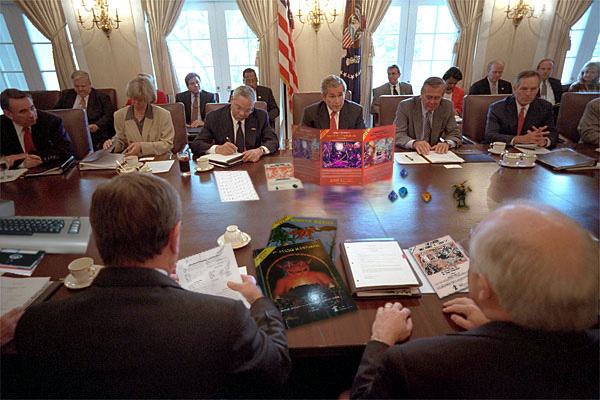
I believe I already issued my own warning about one of these words. And speaking of words, I've been reading Word Freak lately. This is one of the most interesting and disturbing books I've ever read. It's a rather deep look into the world of tournament scrabble players, a world which seemed to suck the author right out of any semblance of normal humanity. When you click the link above, be sure to read the first reader review, esp. the title. The author of that review is one of the major characters in the book, known to his friends as GI Joel. Please don't ask me why, just read the book.
Sunday, August 15, 2004
I've been thinking of lots of blogworthy things in the last several days, but my energy level when I have been at home has been pretty feeble. No good reason for this aside from me being lazy. To break out of the rut, just a few recent thoughts about music, starting with,
Lesson Two from Ukraine.
One of the many things I respected about Tabernacle Church of Lviv was the way they used their musical equipment so efficiently. They had one man (I never learned his name) who took care of all the sound equipment, one young man (who was not quite sure yet if he was willing to commit to Christ) who played the guitar pretty well, and one woman who had one of the $200 type Yamaha keyboards. The latter is what caught my attention. I've been a fan of keyboards for a long time, and I know that a lot of time and engineering has gone into these keyboards, even at that price level, to make them flexible for different types of music and easy to work with. For all that, I have never once seen one of these keyboards used to its potential in any sort of public music performance in America. This woman, though, found the best style settings for each praise song we sang and was familiar enough with the controls to do a really fine acompaniment job for us. I know that most of that is not especially difficult. Finding the appropriate style setting is the hard part. After that its mostly just playing basic chords from a lead sheet. But for some reason no one in our fine country has ever seen the need, in my presence, to use such a well designed tool to fill out a small music leading ensemble.
In other news, and I'd be surpised if even one person cared about this one, I was listening to the radio and heard a fascinating piano piece. It was all over the keyboard, it was difficult, it was beautiful, and it sounded strangely like J S Bach. Knowing that Bach did not write for the modern piano and thus did not write anything that would be played in that style, I surmised it must have been a late romantic or modern composer who had studied a lot of Bach or was writing a set of variations or something like that. Turns out I was close. It was a Busoni transcription of a Bach fantasy for violin and orchestra, IIRC. Busoni, for those who don't know, made a career out of doing exactly that sort of thing--trancribing Bach pieces for modern piano. Quite a pianist and composer in his own right as well.
On a similar note, I heard a couple of months ago a transcription of a Bach organ fantasy by Elgar. I thought it was just as good as anything else I'd heard from Elgar. I think Bach is similar to Augustine and Aquinas and Barth, and perhaps Calvin in theology. You could never hope to comprehend their life's work, but you really do need to start somewhere and see what you find.
Lesson Two from Ukraine.
One of the many things I respected about Tabernacle Church of Lviv was the way they used their musical equipment so efficiently. They had one man (I never learned his name) who took care of all the sound equipment, one young man (who was not quite sure yet if he was willing to commit to Christ) who played the guitar pretty well, and one woman who had one of the $200 type Yamaha keyboards. The latter is what caught my attention. I've been a fan of keyboards for a long time, and I know that a lot of time and engineering has gone into these keyboards, even at that price level, to make them flexible for different types of music and easy to work with. For all that, I have never once seen one of these keyboards used to its potential in any sort of public music performance in America. This woman, though, found the best style settings for each praise song we sang and was familiar enough with the controls to do a really fine acompaniment job for us. I know that most of that is not especially difficult. Finding the appropriate style setting is the hard part. After that its mostly just playing basic chords from a lead sheet. But for some reason no one in our fine country has ever seen the need, in my presence, to use such a well designed tool to fill out a small music leading ensemble.
In other news, and I'd be surpised if even one person cared about this one, I was listening to the radio and heard a fascinating piano piece. It was all over the keyboard, it was difficult, it was beautiful, and it sounded strangely like J S Bach. Knowing that Bach did not write for the modern piano and thus did not write anything that would be played in that style, I surmised it must have been a late romantic or modern composer who had studied a lot of Bach or was writing a set of variations or something like that. Turns out I was close. It was a Busoni transcription of a Bach fantasy for violin and orchestra, IIRC. Busoni, for those who don't know, made a career out of doing exactly that sort of thing--trancribing Bach pieces for modern piano. Quite a pianist and composer in his own right as well.
On a similar note, I heard a couple of months ago a transcription of a Bach organ fantasy by Elgar. I thought it was just as good as anything else I'd heard from Elgar. I think Bach is similar to Augustine and Aquinas and Barth, and perhaps Calvin in theology. You could never hope to comprehend their life's work, but you really do need to start somewhere and see what you find.
Thursday, August 12, 2004
In honor of all my Ukrainian friends, I made a big pot of borsch last night. If you haven't tried it, a good borsch is as good as any soup out there. The beets I got were white beets, so mine doesn't have that wonderful blood red color, but the tase seems pretty comparable to what I had in Ukraine. Will share recipe on request.
Monday, August 09, 2004
I think England has now gotten their priorities straight. I knew something had been missing over there for a while. Just couldn't put my finger on it.
I see some discussions from time to time about how we as Christians can get along when we disagree. This looks like a very interesting take on the subject, though I haven't read it through thoroughly yet. I like the title at least.
Sunday, August 08, 2004
I'm fascinated by the research reported here (it's several paragraphs down). I suppose one could consider this objective proof that scripture does not interpret itself.
Saturday, August 07, 2004
I was reading a little discussion of Christian support of arts and culture (or lack of said support) over at jon's blog, and it got me thinking about a couple of things I saw this past week. I was in Vienna from Sunday night til Wednesday morning. Quite a lovely city, and one where you can walk anywhere, and anywhere is worth walking to--I didn't find any "bad" neighborhoods in my constant wanderings. Anyhow, at one point I remember suggesting to one of my companions that I'd heard about a cool concert that would cost about eighteen bucks to get into. She said for that price she'd rather get a CD she could listen to over and over. I don't say that to embarass her, but rather to point it out as an example of how american typically view culture these days, i.e. something that can occur in the privacy of one's home.
To continue with the narrative, though I never did figure out where that particular concert was being held, we did attend the Vienna summer film festival showing on Tuesday night. That particular night was a concert from St Petersberg from a few years ago. There were probably a thousand people there watching classical music on a giant screen, not counting those who just came for the food and beer. I was trying to imagine how such an event would go over in the US. First of all, they wouldn't serve beer at a state sponsored event. Second, they wouldn't dare attempt to show something with such limited appeal as classical music. Third, people would be asking if they could get a live webcast they could watch at home.
I think perhaps we have become so enamored with our technologies that we are willing to substitute iamges for the real thing. We can control when and where and with whom, if anyone, we play our CD's and our DVD's. Thus we don't need public culture. And thus our souls grow smaller and our recliners grow bigger. Thus we don't need to learn to make music. We can simply push a button and hear the finest musicians in the world.
It's my website and I'll rant if I want to.
To continue with the narrative, though I never did figure out where that particular concert was being held, we did attend the Vienna summer film festival showing on Tuesday night. That particular night was a concert from St Petersberg from a few years ago. There were probably a thousand people there watching classical music on a giant screen, not counting those who just came for the food and beer. I was trying to imagine how such an event would go over in the US. First of all, they wouldn't serve beer at a state sponsored event. Second, they wouldn't dare attempt to show something with such limited appeal as classical music. Third, people would be asking if they could get a live webcast they could watch at home.
I think perhaps we have become so enamored with our technologies that we are willing to substitute iamges for the real thing. We can control when and where and with whom, if anyone, we play our CD's and our DVD's. Thus we don't need public culture. And thus our souls grow smaller and our recliners grow bigger. Thus we don't need to learn to make music. We can simply push a button and hear the finest musicians in the world.
It's my website and I'll rant if I want to.
Friday, August 06, 2004


I tried putting up a big post yesterday, but it got swallowed into the ether. Save me the advice about how not to let that happen. I have to learn from my own mistakes somehow.
Anyway, I think it will be better to break up what I wnted to say into several posts and expand a bit on them. The general topic is "what I learned over the last two weeks." Sounds like an 11th grade paper, doesn't it? I don't think it is possible to organize these in any coherent way, but if you were looking for coherence, you wouldn't have come to my site in the first place.
My first lesson from Ukraine is that american don't know the meaning of the word "creative." In the seven days we were at the camp in the Carpathians, we must have seen forty to fifty skits performed, most of them written that same day. The skits often involved handmade props and ad hoc decorated signs. We also saw several puppet shows (there were a number of kids present), had a cake decorating contest, made table decorations, and had one night where people had to illustrate bible verses in their hair.
This isn't all be any means. The dining hall was heavily decorated. There was a contest for best door decorations for our dorm rooms. There was a "scret angel" program--just like "secret santa"--but I felt woefully behind as I gave my person only four gifts while I received about a dozen. Woefully behind is how our whole team felt throughout the week as we watched folks shouting out chants during meals--some sort of four line iambic version of "bon appetite" in Ukrainian, rendered by the teen crowd, spawning further counter rhymes by the other tables.
I think perhaps the process of the destruction of the western mind by tv and other media is much closer to completetion than I had realized. The response we got for our meagre efforts to participate in all of this seemed much like how our beginning level English teachers would respond to their students. "Wow. You are doing great! In no time you'll learn how to write your own skits. Just keep at it. In a few years, with hard work and some luck, perhaps we won't even be able to tell you are americans."
Anyway, I think it will be better to break up what I wnted to say into several posts and expand a bit on them. The general topic is "what I learned over the last two weeks." Sounds like an 11th grade paper, doesn't it? I don't think it is possible to organize these in any coherent way, but if you were looking for coherence, you wouldn't have come to my site in the first place.
My first lesson from Ukraine is that american don't know the meaning of the word "creative." In the seven days we were at the camp in the Carpathians, we must have seen forty to fifty skits performed, most of them written that same day. The skits often involved handmade props and ad hoc decorated signs. We also saw several puppet shows (there were a number of kids present), had a cake decorating contest, made table decorations, and had one night where people had to illustrate bible verses in their hair.
This isn't all be any means. The dining hall was heavily decorated. There was a contest for best door decorations for our dorm rooms. There was a "scret angel" program--just like "secret santa"--but I felt woefully behind as I gave my person only four gifts while I received about a dozen. Woefully behind is how our whole team felt throughout the week as we watched folks shouting out chants during meals--some sort of four line iambic version of "bon appetite" in Ukrainian, rendered by the teen crowd, spawning further counter rhymes by the other tables.
I think perhaps the process of the destruction of the western mind by tv and other media is much closer to completetion than I had realized. The response we got for our meagre efforts to participate in all of this seemed much like how our beginning level English teachers would respond to their students. "Wow. You are doing great! In no time you'll learn how to write your own skits. Just keep at it. In a few years, with hard work and some luck, perhaps we won't even be able to tell you are americans."
Subscribe to:
Posts (Atom)